Net metering vs net billing نیٹ میٹرنگ بمقابلہ نیٹ بلنگ
| New connections (net billing) | Existing net-metering agreements | |
|---|---|---|
| Grid units you use | Normal tariff (slab or time-of-use) | Normal tariff |
| Units you export | National average energy purchase price (Rs 8.13/unit, April-June 2026) | Old rate (Rs 25.32/unit, April-June 2026) until the agreement expires |
| Surplus value | Credited to next bill or paid quarterly | As per existing agreement |
| Agreement length | 5 years from commissioning, renewable by mutual consent | To original expiry; renewals move to the 2026 terms |
Rates are from NEPRA’s adjustment decision as summarised by PowerPost; NEPRA reviews them regularly, so check your bill for the rate actually applied.
Net-billing bill estimator
Enter monthly units and your tariff. The export rate is editable.
Typical steps to connect solar to the grid
- Get a site survey and design from a registered installer.
- Apply to your electricity distribution company (DISCO) with the required documents and design.
- Install and have the system inspected.
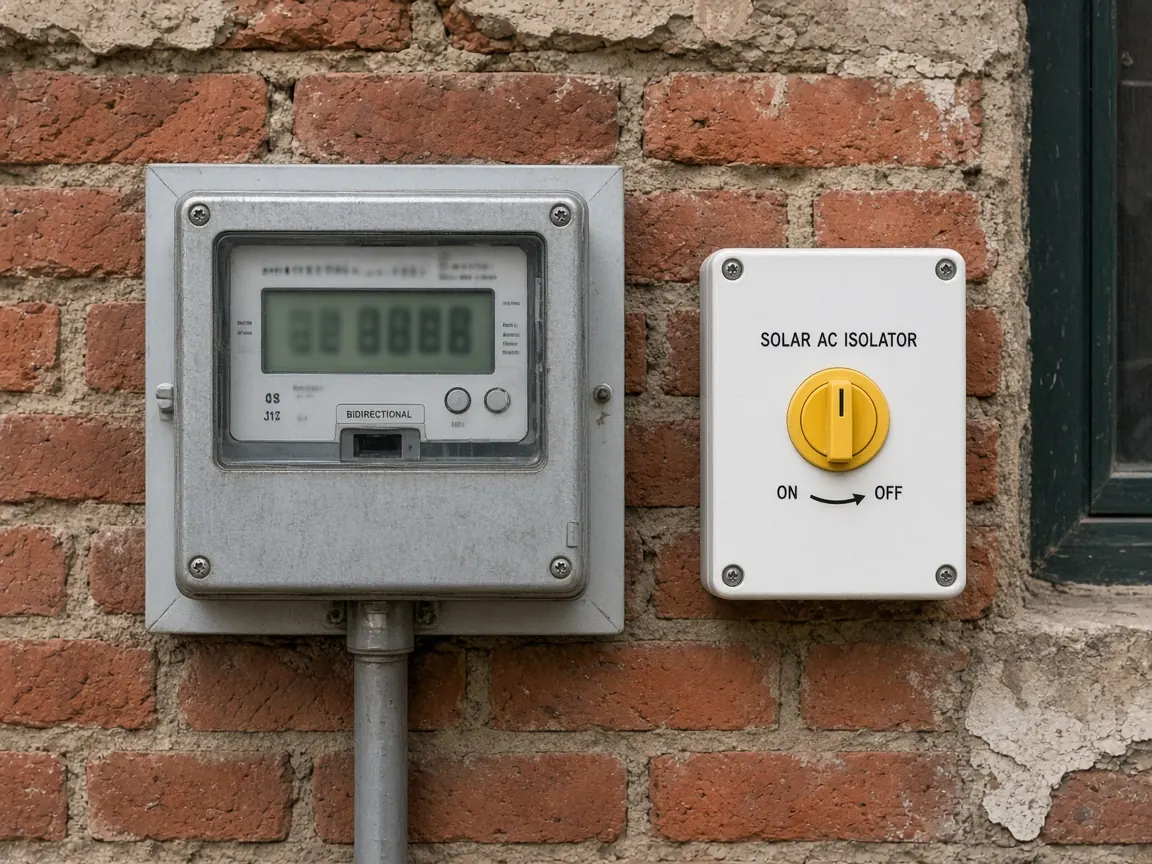
- Sign the agreement and have the bidirectional meter installed.
Procedures and fees vary by DISCO; confirm requirements with your DISCO and installer.
What this means for system size
- Because exports earn much less than the tariff you pay, size to your daytime consumption, not to “zero bill”.
- If most of your use is in the evening, consider a battery (hybrid) system. See prices.
- Check your own bill with the calculator.
Why self-consumption matters under net billing
Under net billing, a unit you use yourself saves you the full tariff, while a unit you export is credited at a much lower rate. Here is a hypothetical example to show the idea: assume your tariff is Rs 50 per unit and the export credit is Rs 8.13 per unit (the April to June 2026 figure above). If 200 of your solar units are used at home, they save Rs 10,000. If those same 200 units are exported, they earn a credit of about Rs 1,626. The difference is why we recommend sizing your system to your own daytime use and, if you can, shifting loads such as washing machines, water pumps and air conditioners into daylight hours. This is illustrative arithmetic; your actual tariff and credit rate come from your bill.
Checklist before you apply
- Collect a recent electricity bill and your CNIC copy.
- Choose an installer that is registered and familiar with your distribution company’s process.
- Ask for the system design, single-line diagram and equipment datasheets.
- Confirm the type of meter needed and who supplies it.
- Keep copies of every application, inspection and approval.
Common questions about timing and cost
The application and inspection process can take several weeks, depending on your area and the distribution company. Fees, meter charges and technical requirements can change, so ask your installer for the latest steps and confirm them with your distribution company before paying for the grid-connection stage.
Related: solar buying guide and solar calculator.
FAQs
Is net metering still available in Pakistan?
What rate will I get for exported units?
Does adding panels affect my old net-metering agreement?
Is solar still worth it under net billing?

Published 28 November 2026 · Last updated 29 November 2026. We cite the source and date for every price or statistic and correct errors quickly. Read how we research or report a mistake to [email protected].